
Currently Empty: $0.00

These courses are designed for anyone interested in developing practical life skills that support clarity, resilience, and meaningful change. They are suitable for people engaging for personal growth, professional development, or both. No prior experience is required.
No. All Foundation courses are suitable for all levels and are designed to be accessible regardless of background, profession, or previous training.
These courses are educational and developmental in nature. They are not therapy and are not intended to replace medical, psychological, or mental health treatment.
Each course is delivered through four live Zoom workshops, supported by guided practices and self-directed learning activities. Sessions are interactive and experiential.
Live participation is strongly encouraged due to the experiential nature of the courses. If you miss a session, guidance on how to stay engaged with the learning will be provided.
Each course involves:
• 12 hours of live workshops
• Approximately 10 hours per week of self-guided study over four weeks
This equates to a total of 52 learning hours.
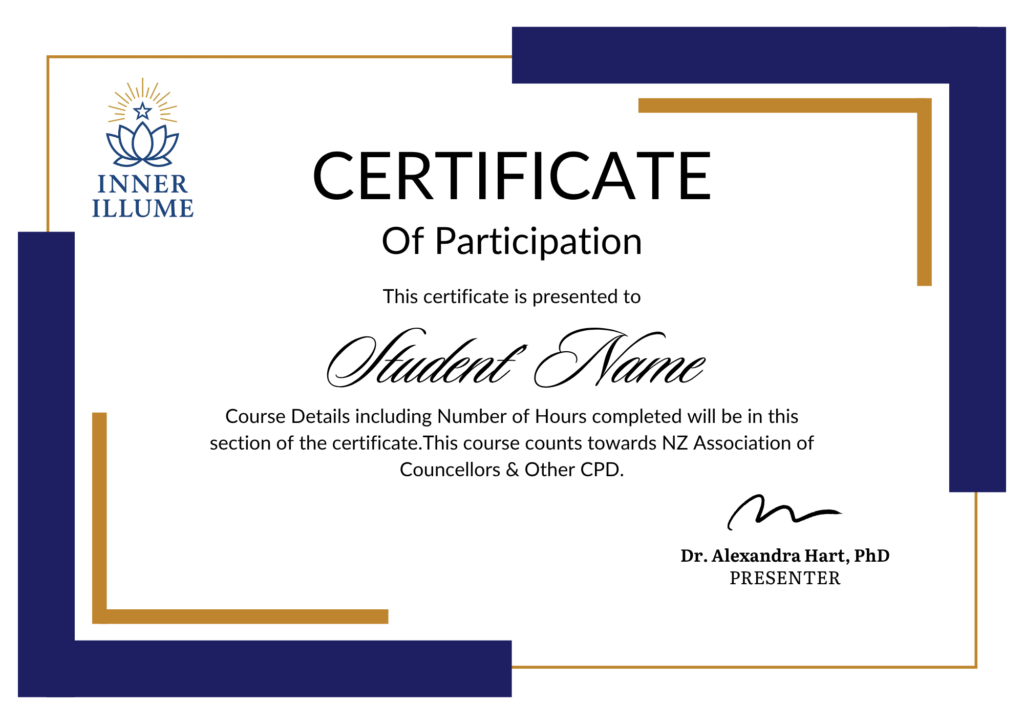
Yes. Participants who complete the course may apply for a certificate of completion listing the total number of course hours.
Many participants use these courses as Continuing Professional Development. Recognition depends on your professional body, so we recommend checking their requirements.
All Foundation courses are stand-alone and can be taken individually. However, completing all Foundation courses (plus the Review Course) is required for progression to higher-level Lumina Life Compass training.
There are no formal exams. Learning is supported through reflection, practice, and participation.
You will be supported through live facilitation, structured materials, and guided practices. These courses emphasise self-reflection and applied learning.
While focus can improve productivity, the course emphasises meaningful attention rather than efficiency alone.
Yes. Participants learn how attention is shaped and how to work skillfully with distraction and fragmentation.
Focus is explored as both narrowing and sustaining attention, as well as knowing when to release it.

 Peter McDow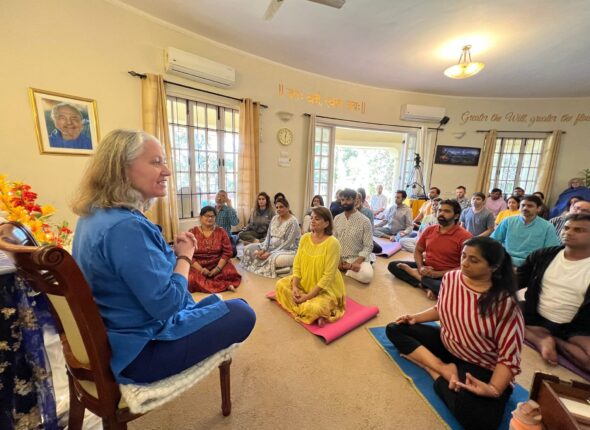
 Inner Illume